Showing posts with label zoo. Show all posts

Monday, April 22, 2024

Platypus

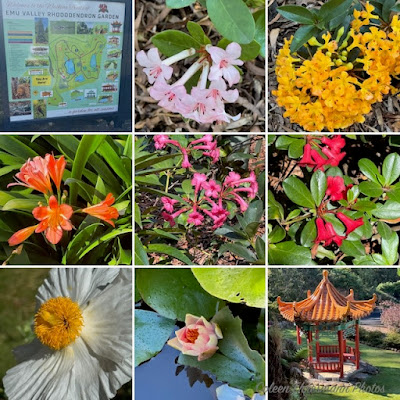
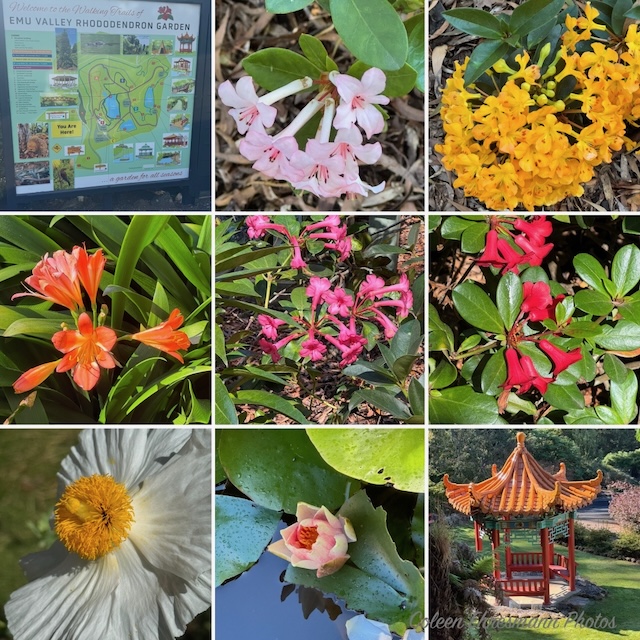
I think I was in elementary school when I read about a platypus in Weekly Reader. I was so fascinated by the unusual animal. It was then and has always been ever since to see one in real life. It was at the  Emu Valley Rhododendron Garden Tour that my wish was finally realized.


The focus of the garden is the flowers and trees, but my focus was the platypus. Our guide was up front with us; we may or may not see any of the resident platypuses (platypi?) in any of the three garden ponds. I endured the up hill, down hill narrow paths wandering through the flowerless gardens (it was the end of summer). The information I remembered from our guide is the garden is maintained by aging volunteers. And like with organizations in the U.S. the Emu Valley Garden is having trouble finding local younger people to take an interest in the gardens so it can continue as a tourist destination in Burnie, Tasmania.

Finally, we approached one of the three ponds and all eyes were pealed on the surface of the pond water. 


Finally, a squeal! I see one!


The platypus uses its duck bill to disturb the mud at the bottom of the pond to unearth food. We were told to look for cloudy spots on the water as it would indicate a platypus at work.


It was digging near the shoreline on this photo. We waited for it to surface and when it did, was some  distance away from the cloudy water.


OFD's best photo of one of the residents


Platypus Facts from National Geographic Kids:
  • Duck-billed platypuses are small, shy animals. 
  • They have a flattened head and body to help them glide through the water. Their fur, dark brown on top and tan on their bellies, is thick and repels water to keep them warm and dry even after hours of swimming.
  • A platypus' snout is quite soft and covered with thousands of receptors that help the platypus detect prey.
  • Platypuses are bottom feeders, scooping up insects and larvae, shellfish, and worms in their bill along with bits of gravel and mud.
  • An unlikely mix of duck, beaver, and otter, the male platypus also has poisonous stingers (a spur) on his rear feet.
  • Folds of skin cover the eyes and ears of the platypus to prevent water from entering, and the nostrils close with a watertight seal.
From the San Diego Zoo Wildlife Alliance:
  • Often forage 10 to 12 hours per day; longer in some locations and seasons
  • Females lay eggs, 1-3 eggs, usually 2
  • Females lack nipples; milk exuded through skin patches
  • Few platypuses in zoos; currently, two reside at the San Diego Zoo Safari Park, all others in Australian collections
From ThoughtCo:
  • Size: 17-20 inches
  • Weight: 1.5-5.3 pounds
  • Lifespan: 17 years
    Population: ~50,000
    Conservation Status: Near Threatened

I did see flowers at the end of our tour of the Emu Valley Rhododendron Garden, although they were NOT rhododendrons. They were colorful but secondary to the platypus sightings.

I/we were fortunate enough to see platypuses at the Taronga Zoological Park in Sydney.

Lots of little people and their parents were also looking at the aquarium displays, so getting a swimming photo was impossible. This one is under the branch, waiting to slide into the water.


a lighter colored fur underbelly than the rest of the body


The platypus was hunted for its fur, but it has been a legally protected species in all states where it occurs since 1912. The word platypus comes from the Greek word meaning flat-foot. 

Back to Burnie, Tasmania for a final comment or two...

We were the last cruise ship of the season in Burnie. The mayor of Burnie climbed onto our bus to welcome us to her community and to thank us for visiting Burnie. (Our driver told us she welcomes all visitors on the buses if her duties allow.)  She then invited us to visit the Visitor's Center where locals had hand-crafted items for sale. While Hubby and I looked for the nearby first geocache find in Tasmania, OFD went shopping. When she showed her cute purchase, I was on a hunt. I, too, needed a hand-crafted platypus!


I finally found the lady selling hand-crafted wool items
I now have a platypus to remind me of this amazing cruise
and the real life platypus sightings


This concludes the New Zealand & Australia cruise posts.


Saturday, April 20, 2024

Taronga Zoological Park in Sydney

 Tarongo is the Aboriginal word meaning beautiful view. The concept for the zoo began in 1908. The zoo at this location opened in 1916 and has undergone some major changes in mission from leisure and recreation to education and animal conservation as well as in structure and expansion.

The Taronga Zoo is not to be confused with the Sydney Zoo founded in 2015 but is 24 miles from the city center. The Sydney Zoo has many of the same animals as the Taronga Zoo, which is located across the harbor in Sydney and much easier to get to using public transportation than the Sydney Zoo.

This is the last of the zoo posts, but one of the most interesting because of the native animals.


We caught the train a couple of blocks from our hotel for a quick ride to the harbor where we met my brother and sister-in-law.


We rode the ferry across the harbor from the Opera House to the Taronga Zoo.


ferry building across the harbor


main entrance to the zoo at the upper level

Many of the buildings within Taronga Zoo were designed to stand out as architectural landmarks. The most recognizable, the main entrance, was designed in the elaborate Edwardian Baroque style with Beaux-Arts planning and featured a copper domed entranceway and ornate plaster decorations of flora and fauna. The Taronga Conservation Strategy suggests that the choice of this aesthetic spoke of: “the prevailing Zoo philosophy to amuse and entertain…”. Much of the zoo’s early design (1913 – 1914) has been attributed to architect and army officer, Colonel Alfred Spain.


one of several metal art at the entrance


the animals of Australia will be the focus of this post


We would have missed this sighting completely if a zoo worker had not pointed out the tree kangaroo high in the trees. Tree Kangaroos are considered endangered. They spend 60% of their time in trees. I added a link to Wikipedia because I had never heard of a tree kangaroo.


Red-Necked Wallaby


Kangaroo
considered the Kung-Fu Kangaroo because of its fighting techniques

A woman geocacher who attended the event I hosted in Sydney shared her experience when she encountered a kangaroo while geocaching. It looked as though the kangaroo was coming towards her and could attack. She was told the best defense is to lie on the ground, face-down, which she did. The kangaroo jumped on her back, ripping her pants from the waist-band to the cuff.  The next day a large footprint was visible on her back. She was sore, but counted herself very lucky to be alive from her kangaroo attack.


Emu and a Wallaby
note the difference in size!


Koala
look how relaxed it is


tubes containing eucalyptus leaves were attached to each tree
koalas sleep up to 20 hours a day, digesting the fibre and toxins


Dingo


Dingo
also known as a feral dog


Spinifex Hopping-Mouse


Ghost Bats


Greater Bilby
a nocturnal, burrowing marsupial


Australian Sea Lions


Fiordland Penguin


notice the yellow feathers near the eyes


a view of the Fiordland Penguin swimming in the tank


A display showing the different sizes of the various penguin species. Little Penguins (or Blue or Fairy) are the smallest and on the far left. Emperor Penguins are the largest and on the right.


the Yellow-Eyed Penguin
and next to it, the Fiordland Penguin
they are sixth and fifth (in size) from the right/Emperor Penguin

The Yellow-Eyed penguin that I had read with decreased sights of 70% since November 2023 was the one excursion I canceled. I felt lucky to see it in this display.


Little Penguin
also known as Fairy Penguin or Blue Penguin or Little Blue Penguin


New Zealand Fur-Seal


And then an animal not related to Australia or New Zealand, but fitting the interesting category...

Red Panda
has carnivore teeth but eats mostly bamboo leaves
native to Nepal and China

There were other animals we did see and a few we did not, like the Sun Bear and the Tigers. Overall, I felt the Taronga Zoo was excellent and am glad we had the chance to spend the day there.


Friday, April 19, 2024

Out of Africa in Australia

 The Taronga Zoological Park had a section devoted to animals of the African Savannah and Rainforest Trail. This is the second of three the zoo posts.


colorful signage


one of several giraffes


family observing the chimpanzees


the shrewdness (the name for a group of all types of apes)


one entertainer


mosaic decor in the walk ways


pride of lions resting on a platform

On the morning of 2 November 2022 at 6.40am, five African lions escaped their enclosure. Police officers were called to the zoo at around 7.00am, and no injuries were reported. The lions were returned to their enclosure with one cub tranquilized. ~ Wikipedia


another view of the platform of lions

somehow we missed the tigers


meerkats


one of several zebras


a fennec fox
look at those EARS!


a pygmy hippo


entertaining elephants

More research says these are Asian elephants imported from Thailand into Australia to participate in the Australasian Conservation Breeding Program. Two male calves have been born in the zoo since they arrived in 2006. They are part of the Rainforest Trail in the zoo.


loved the decor at the entrance to the section of African Savannah animals

It was Good Friday of the Easter weekend when we visited the Taronga Zoological Park. By the time we reached the zoo we had been informed Good Friday is a National Holiday in Australia. The zoo was a popular place for families. We encountered strollers and little people everywhere enjoying the beautiful day and all the animals.